Grape Valley
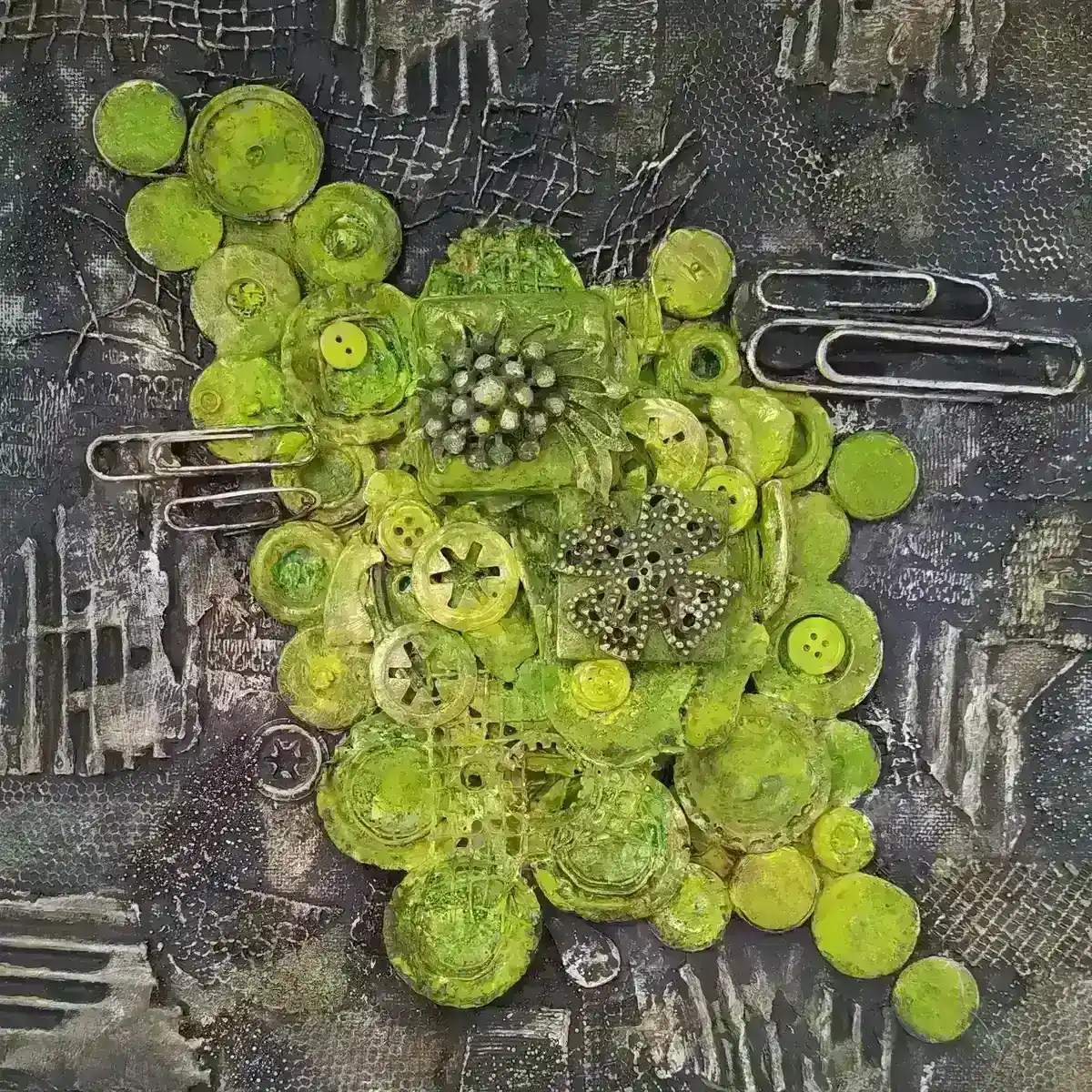
There are places in the imagination where texture becomes terrain, where discarded fragments find new life, and where memory is not just recalled but reassembled. Grape Valley is one such place—a 21cm x 21cm mixed media canvas that invites the viewer into a landscape forged from remnants, layered with meaning, and pulsing with quiet vitality.
Origins of Grape Valley
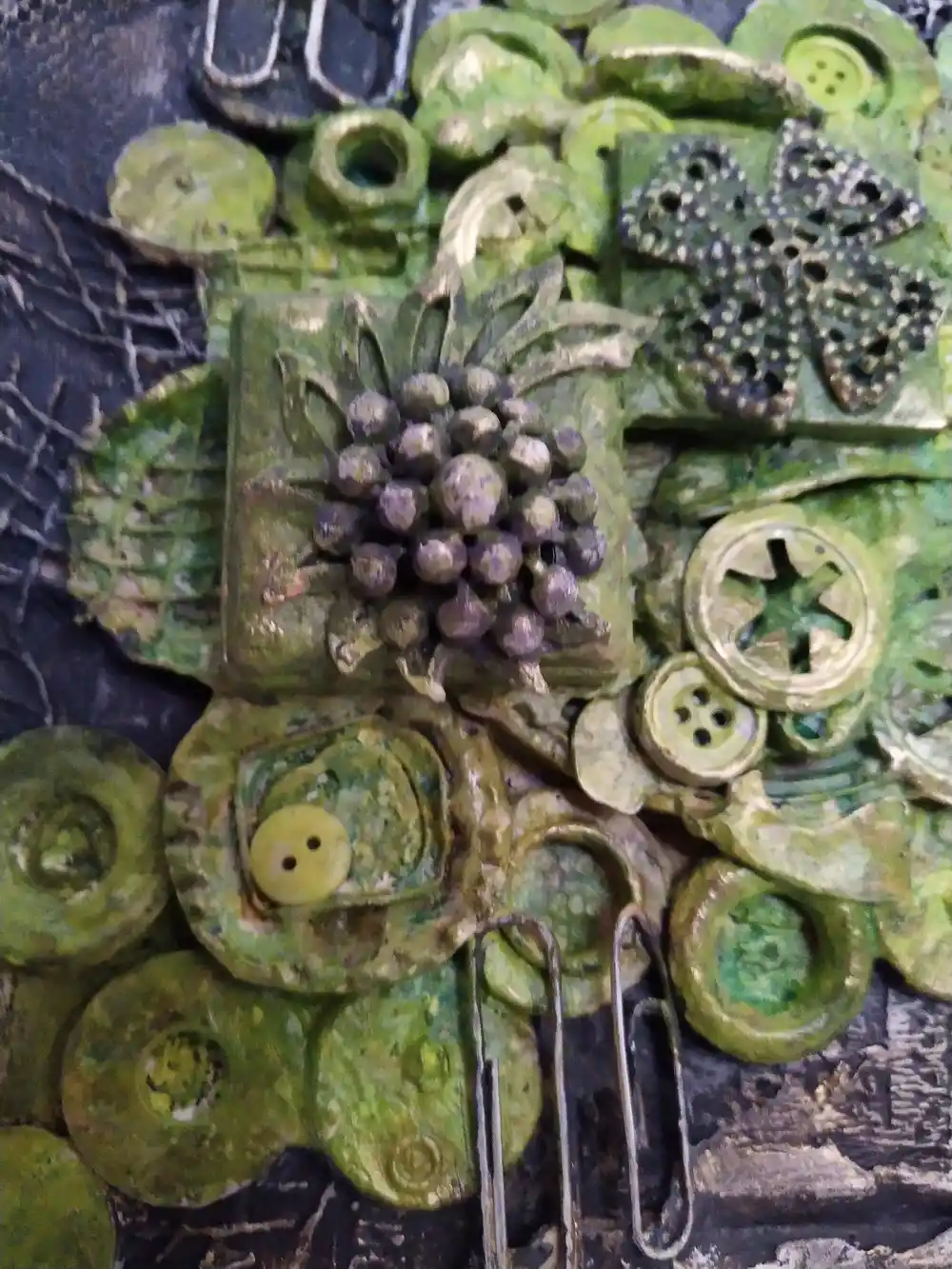
At the heart of Grape Valley lies a cluster of green-toned forms—buttons, gears, metallic embellishments, and plastic fragments—that evoke the quiet abundance of a bunch of grapes. This central motif emerged not from planning, but from recognition: a moment when the materials themselves suggested fruit, growth, and the gentle curve of nature’s geometry. The title Grape Valley was born in that moment, a name that honours both the organic resemblance and the emotional resonance of the piece.
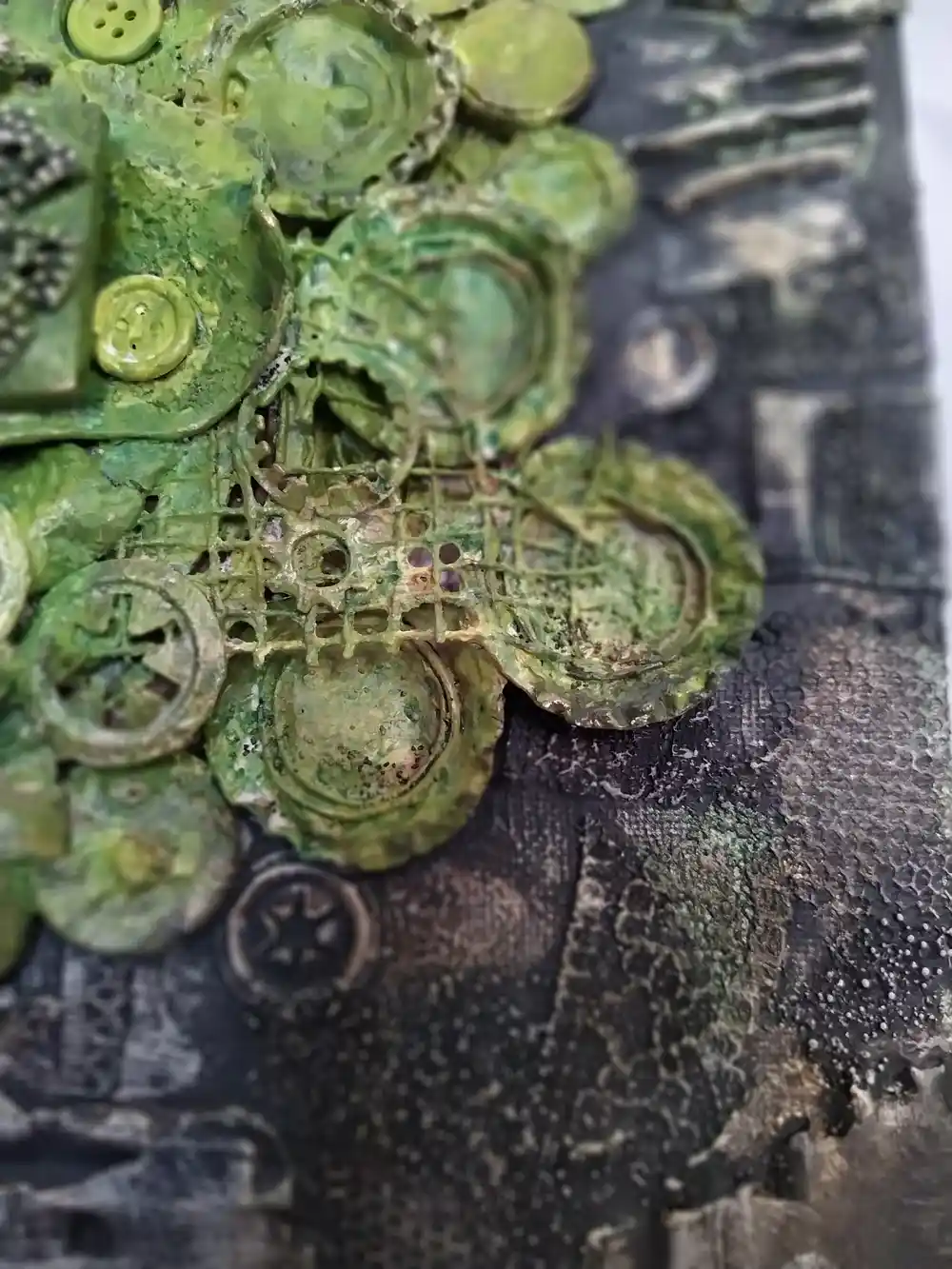
The canvas is built from scrap card and lace, layered with metals and plastics that have been salvaged, repurposed, and transformed. These materials, once overlooked, now form a composition that feels both industrial and organic, structured and spontaneous. In Grape Valley, the tension between rigidity and fluidity becomes a source of energy. The gears suggest motion, the lace evokes softness, and the interplay between them creates a dynamic visual rhythm.
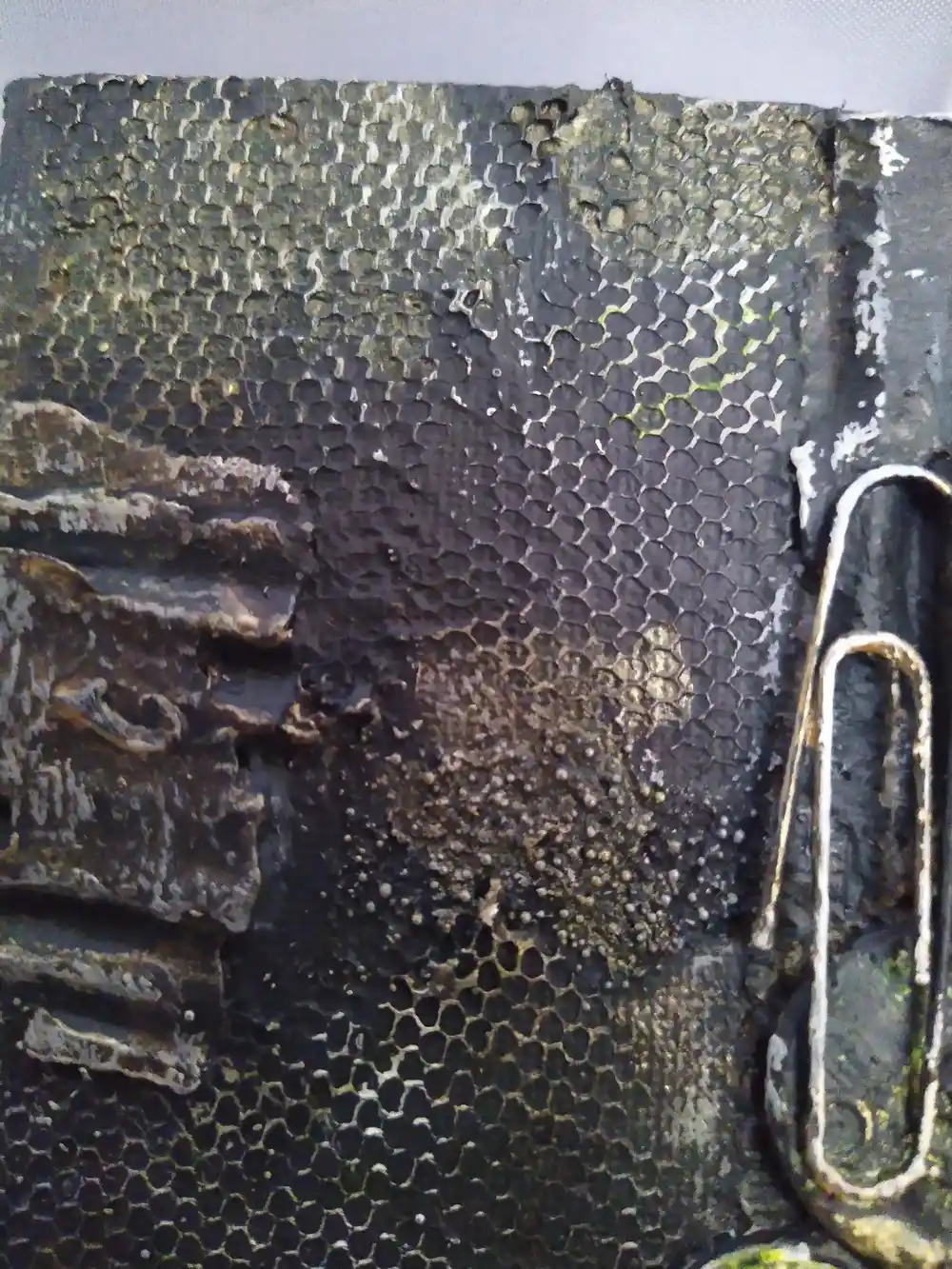
The background of Grape Valley is rich in metallic silver and black, setting a moody, reflective tone. Patterns reminiscent of woven fabric and ridged surfaces create depth and movement, like shadows cast across a vineyard at dusk. This contrast between the vibrant green center and the dark surroundings heightens the drama, drawing the viewer’s eye inward and inviting contemplation. What flourishes in unlikely places? What beauty emerges from ruin?
Grape Valley is part of an ongoing exploration of motion, balance, and nature—especially how organic forms can emerge from industrial fragments. The grape-like centerpiece becomes a metaphor for resilience, for the way life insists on blooming even in the midst of decay. It is a tactile meditation on growth, memory, and the quiet power of assemblage.
Assemblage, for me, is not just a technique—it is a philosophy. It is a way of honoring the overlooked, of giving voice to the silent, of creating meaning from what remains. In Grape Valley, each element carries its own history. The buttons may have once fastened garments; the gears may have turned in forgotten machines. Together, they form a new narrative—one that speaks of transformation, of continuity, and of the beauty found in imperfection.
The title Grape Valley is repeated throughout this statement not as a refrain, but as a grounding point. It is the name of a place, a concept, a feeling. It is the valley where discarded things gather, where textures speak, and where the viewer is invited to linger. In naming the piece Grape Valley, I wanted to evoke both the physicality of the grapes and the emotional terrain they inhabit.
This work rewards close looking. It asks the viewer to trace the contours of each embedded object, to feel the ridges and recesses, to imagine the stories behind each fragment. In Grape Valley, the act of looking becomes an act of listening. What do we discard, and what do we preserve? What stories live in the textures we overlook?
The scale of the piece—21cm x 21cm—is intimate. It invites personal engagement, a kind of visual whisper. The framed under edge adds a quiet containment, a boundary that holds the chaos within. This framing is both literal and conceptual. It reminds us that every image is bounded, every truth is framed.
In creating Grape Valley, I allowed intuition to guide the placement of materials. There was no blueprint, no sketch—only a conversation between hand and object. Each piece found its place through touch, through resonance, through the quiet logic of assemblage. This process mirrors the way memory works: layered, nonlinear, and deeply personal.
The green cluster at the center of Grape Valley is not just visual—it is emotional. It speaks to abundance, to growth, to the sweetness of things that endure. It is a symbol of hope, of renewal, of the possibility that beauty can emerge from the broken. In this way, Grape Valley becomes more than a composition—it becomes a gesture of care.
I am drawn to the interplay between industrial and organic, between precision and decay. In Grape Valley, this interplay is embodied in the materials themselves. The metal components are rigid, engineered, and cold. The lace is soft, mutable, and warm. Their juxtaposition creates a dialogue—a conversation about what is fixed and what is fluid.
The textures in Grape Valley are not decorative; they are expressive. They speak to erosion, to the passage of time, to the accumulation of experience. They are meant to be felt as much as seen. I want the viewer to imagine touching the canvas, to feel the weight of the materials, to sense the history embedded in each fragment.
This piece is also a reflection on memory. Assemblage is a form of remembering, of gathering what has been scattered. In Grape Valley, memory is not static—it shifts, fades, and reconfigures. The materials are not just objects; they are traces. They carry the imprint of use, of time, of presence.
The title Grape Valley is a reminder that naming is an act of framing. It shapes how we see, how we interpret, how we connect. It is a way of honoring the emotional truth of the piece, of giving language to what is felt. In repeating the title, I hope to deepen its resonance, to invite the viewer into its layered meanings.
As I continue to create, I return to Grape Valley often. It anchors me. It reminds me of the power of materials, of the importance of ambiguity, of the beauty of contradiction. It is a piece that holds many truths, many textures, many stories.
In exhibitions, I place Grape Valley where light can catch its textures, where viewers can approach it closely. I include a note inviting touch, inviting engagement. I want people to feel the weight of the materials, to sense the history embedded in each fragment. I want them to see the green cluster, and to wonder.
Ultimately, Grape Valley is about trust. It is about the trust we place in materials, in memory, in the act of making. It is about the betrayal of that trust, and the resilience that follows. It is about seeing and being seen, about hiding and revealing, about truth and its many disguises.
Thank you for stepping into Grape Valley. Thank you for listening to its textures. Thank you for believing, even if only for a moment, that beauty can bloom in the valley of the overlooked.
Commission a Custom Art Piece
You can commission a bespoke Piece of artwork in your choice of colour (subject to availability), adding a personal touch that reflects your unique story and experiences. Each piece is thoughtfully crafted, ensuring that no two are ever the same, just like the moments they capture. This process fosters a meaningful connection between artist and patron, celebrating the individuality of each person’s journey through time.
Commissions Form
The more detail you provide, the better we can tailor the piece to your vision. Commissions typically take between 2 to 6 weeks to complete.
Thank you for looking
Please note, colours may vary from monitor to monitor.
Check out my other works here at https://lyn-5818.canvy.art/



Reviews
There are no reviews yet.