Rainbow City,
Rainbow City, began as an exploration of how time shapes both the world around us and the worlds we build within ourselves. I wanted to create a piece that felt alive — something that didn’t just depict time, but carried it, held it, and moved with it.
Time is often spoken of as something abstract — a quiet force that moves invisibly through our days — but in Rainbow City, time becomes something physical, radiant, and undeniably present. This mixed media assemblage transforms the idea of time from an unseen rhythm into a tangible, glowing centerpiece, surrounded by the intricate mechanisms that both support it and are shaped by it. The artwork stands as a bold, three‑dimensional statement about the relationship between human life, the natural world, and the unseen systems that keep everything in motion.
At the heart of Rainbow City
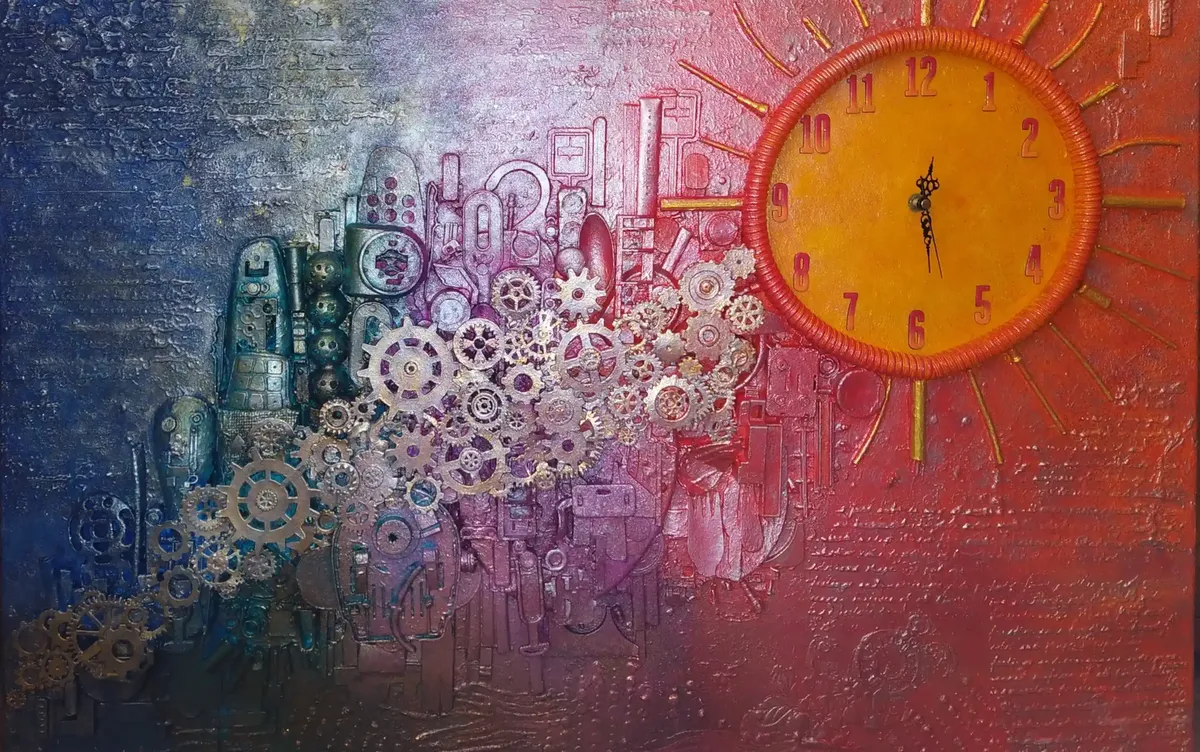
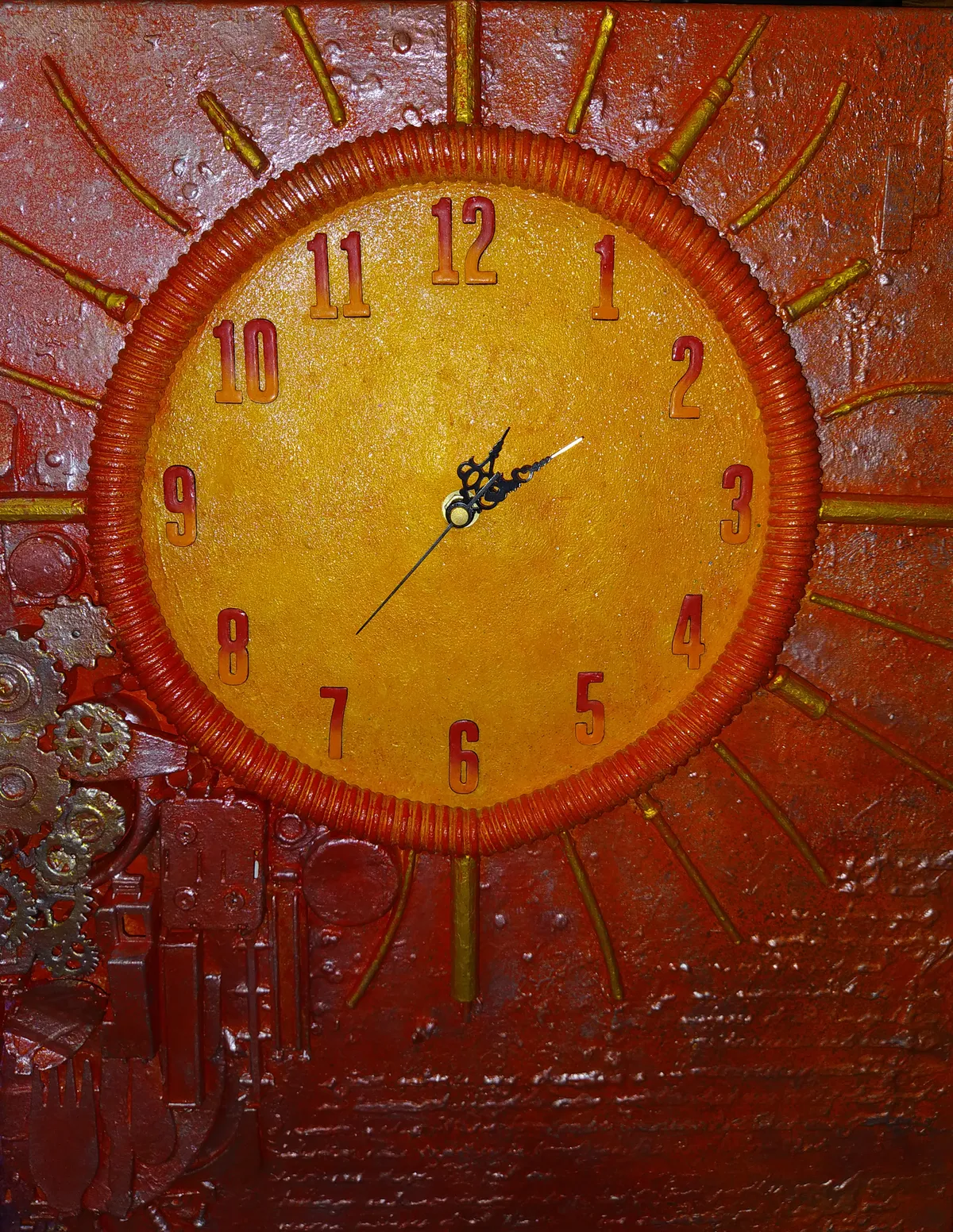
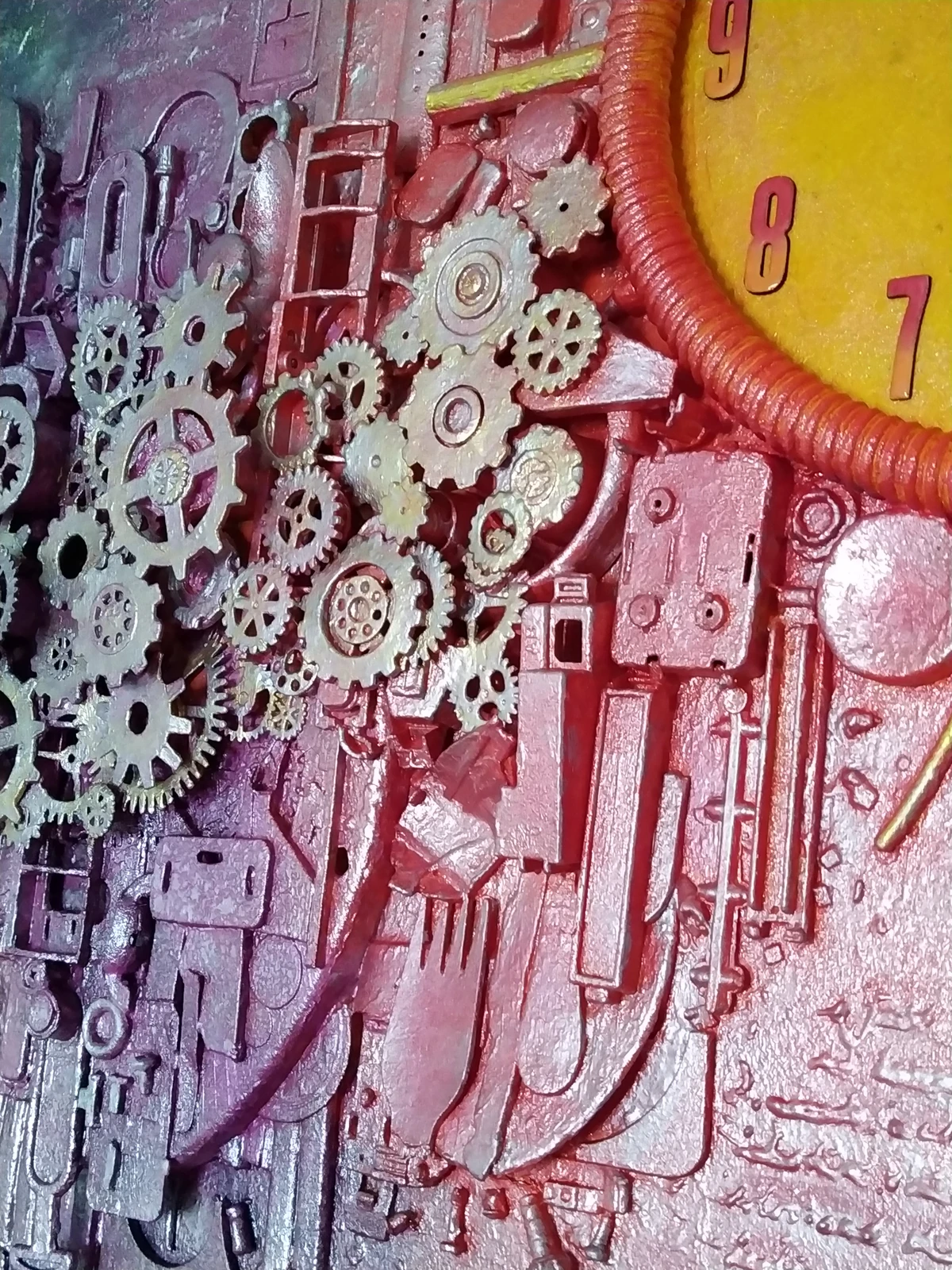
The working clock, positioned like a blazing sun on the right side of the composition, is something I chose deliberately. Its bright orange face, encircled by radiating lines, immediately commands attention. The clock is not merely decorative; it functions, ticks, and marks the passing of real time. This transforms the artwork from a static object into a living presence — a piece that continues to move, change, and participate in the world long after I have completed it. The clock becomes a symbol of continuity, a reminder that time is always active, always pushing forward, always shaping the landscape of our lives.
Surrounding this clock‑sun is a field of warm reds and oranges, painted with acrylics and enhanced with Nuvo shimmer, creating a luminous, almost molten glow. The shimmer catches the light differently depending on the viewer’s angle, giving the impression that the sun is pulsing or breathing. This subtle movement reinforces the idea that time is alive — not a cold mechanical measurement, but a warm, energetic force that radiates through everything it touches.
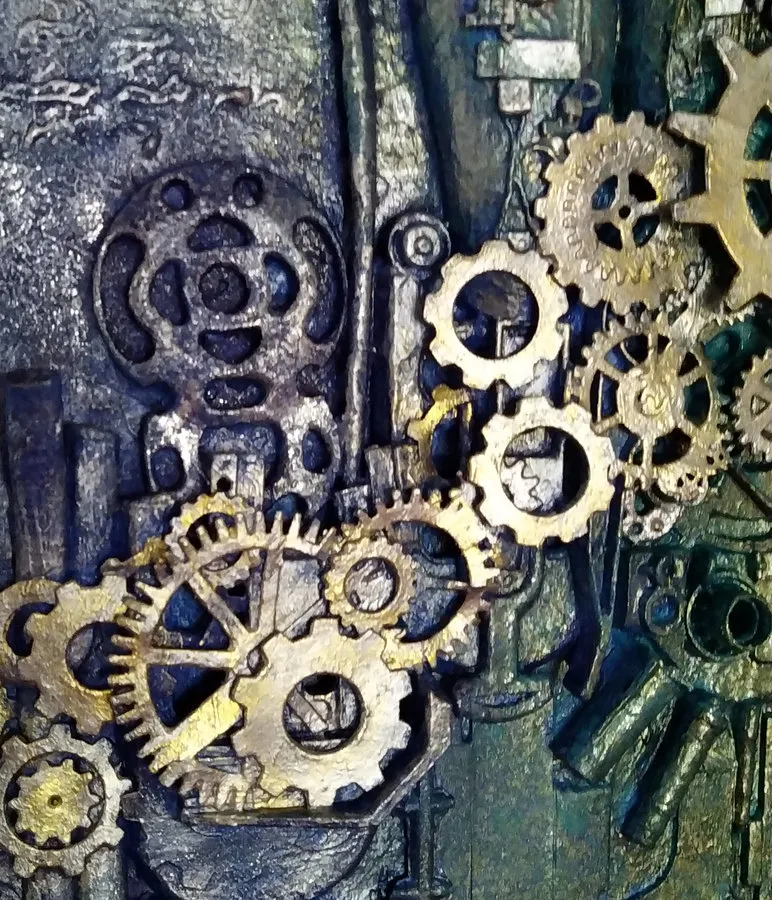
Moving leftward across Rainbow City, canvas, the viewer encounters a dramatic shift in tone, colour, and texture. The fiery warmth of the sun transitions into deep blues, purples, and metallic hues. This cooler region is densely populated with layered cardboard cogs, each one hand‑cut, shaped, and built up to create a three‑dimensional mechanical landscape. These cogs are not plastic — they are reclaimed cardboard, transformed through layering and shaping into convincing mechanical forms. Only one cog, placed near the centre in lilac/violet, is plastic — a deliberate final addition I made to complete the visual rhythm of the composition.
This choice of materials adds a layer of meaning. Cardboard, often dismissed as disposable, becomes the backbone of the mechanical world in Rainbow City. It is a reminder that even the humblest materials can be elevated into something intricate, powerful, and symbolic. The single plastic cog stands out not only in colour but in origin — a moment of spontaneity, a final intuitive decision that adds character and contrast.
The cogs represent the inner workings of the clock — the hidden mechanisms that make time measurable, predictable, and structured. But they also symbolise something larger: the systems that underpin our lives, our societies, and our environments. In this sense, Rainbow City becomes a meditation on how time governs everything, from the turning of the earth to the routines of daily life. The cogs are metaphors for the unseen labour that keeps the world functioning.
The transition from the cool mechanical left side to the warm organic right side is not abrupt but carefully blended. Colours shift gradually, textures overlap, and the materials seem to merge into one another. This creates a sense of movement across the canvas, as though the viewer is witnessing the transformation of machinery into energy, or the conversion of mechanical time into lived experience. The artwork becomes a visual journey from structure to emotion, from mechanism to meaning.
One of the most striking features of Rainbow City is the skyline effect created by the arrangement of materials above the central line of cogs. The shapes and silhouettes evoke the impression of buildings, towers, and architectural forms, rising like a cityscape against the backdrop of the clock‑sun. This skyline is not literal; it is suggestive, abstract, and open to interpretation. But its presence introduces a human element into the composition. It implies that the workings of time and machinery are not separate from human life — they are intertwined with the environments we build and inhabit.
Below the line of cogs, the materials are arranged in a way that mirrors the skyline above, but not perfectly. This creates the impression of a reflection, as though the cityscape is being echoed in water or glass. The reflection is intentionally imperfect, distorted, and fragmented. This suggests that our perception of the world — and of time — is never exact. What we see is always influenced by perspective, memory, and emotion. The imperfect reflection also hints at the idea that the structures we build, both physically and metaphorically, are never as stable or permanent as they appear. Time distorts, reshapes, and eventually erodes everything.
The use of recycled plastics and metal components throughout the rest of the piece adds another layer of meaning. These materials, once discarded and considered worthless, are transformed into something beautiful, meaningful, and enduring. This act of reclamation speaks to themes of sustainability, renewal, and the cyclical nature of time. Just as the clock measures the passage of hours, the materials themselves embody the passage of objects through different stages of usefulness. They remind the viewer that everything can be repurposed, reimagined, and given new life.
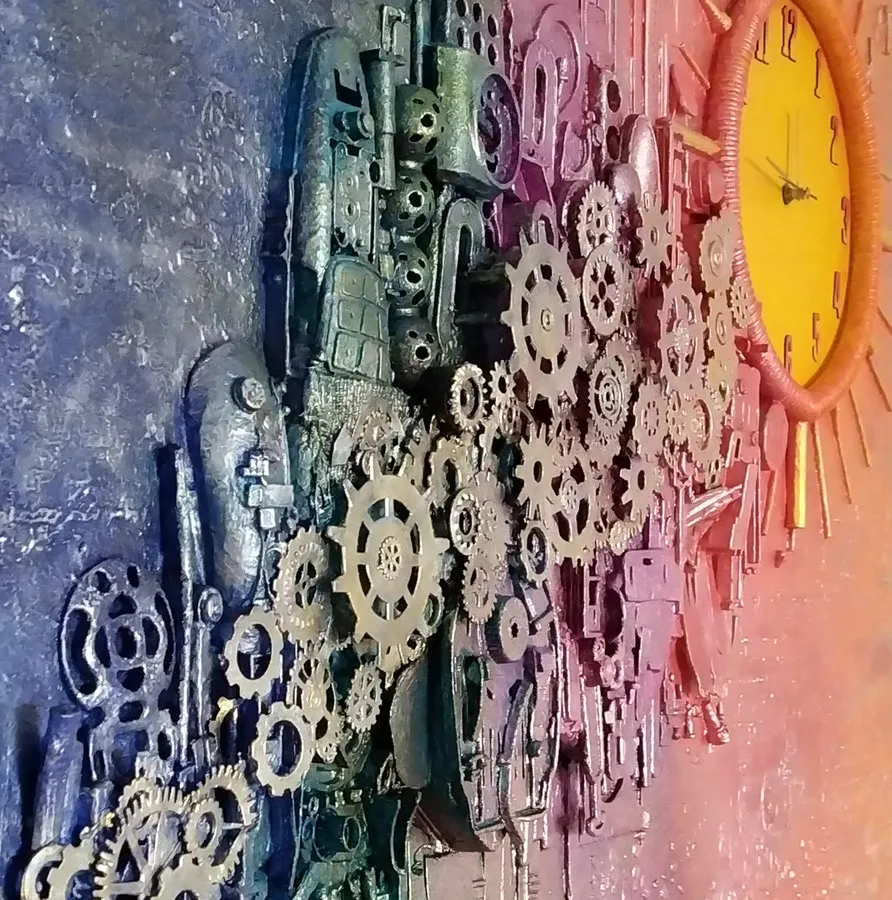
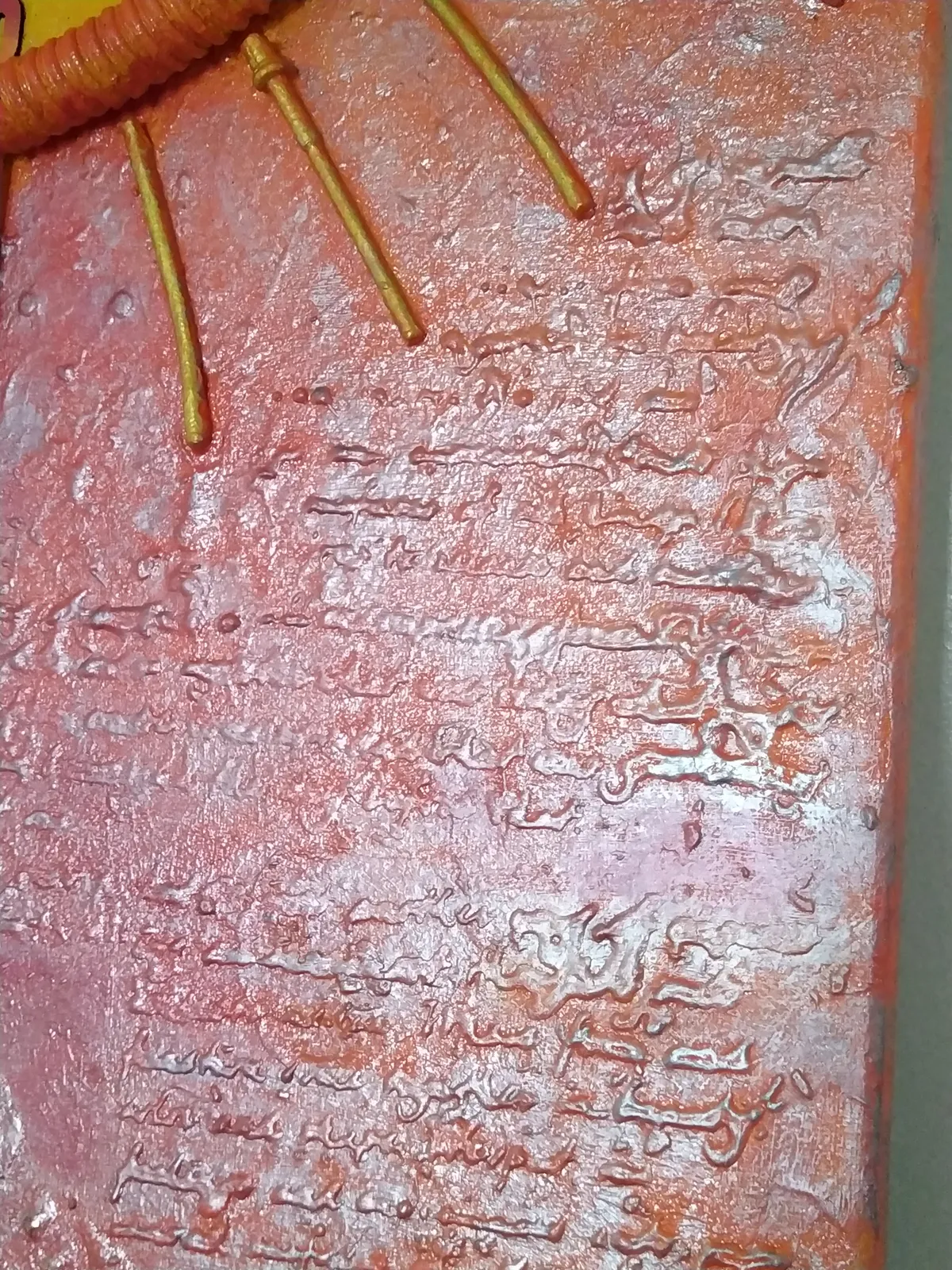
The textured background enhances the depth and dimensionality of the piece. Layers of paint, cardboard, and shimmer create a tactile surface that invites the viewer to look closely, to explore the ridges and valleys, to trace the movement of colour and form. The texture gives the artwork a sense of physical presence, making it feel more like a sculptural object than a traditional painting. This three‑dimensionality is further emphasised by the fact that the piece projects outward from the canvas by approximately 8cm. The protruding elements cast shadows, catch light, and change appearance depending on the viewer’s position. This dynamic quality reinforces the theme of time as something that shifts and evolves.
The size of the artwork — 90cm by 60cm — gives it a commanding presence. It is large enough to dominate a wall, to draw the eye from across a room, and to create an immersive experience for the viewer. The scale allows the details to be appreciated individually while still contributing to the overall composition. The viewer can step back to take in the full sweep of the clock‑sun and the mechanical landscape, or step forward to examine the intricacies of the cogs and textures.
The interplay between the warm and cool colour palettes is one of the most compelling aspects of Rainbow City. The fiery oranges and reds of the clock‑sun contrast sharply with the deep blues and purples of the mechanical left side. This contrast creates a sense of tension and balance, suggesting the duality between emotion and logic, nature and industry, energy and structure. The colours are not merely aesthetic choices; they are symbolic representations of the forces that shape our world.
The Nuvo shimmer adds a magical, ethereal quality to the artwork. It catches the light in unexpected ways, creating subtle glimmers that shift as the viewer moves. This shimmering effect enhances the sense of movement and life within the piece. It suggests that time is not static but constantly in flux, shimmering with possibility and change.
The working clock at the centre of the composition is the heart of Rainbow City. It is both literal and metaphorical. Literally, it tells the time. Metaphorically, it represents the sun — the original clock by which humans measured days, seasons, and the passage of life. The sun has always been a symbol of energy, growth, and renewal. By merging the sun with a mechanical clock, I wanted to bridge the ancient and the modern, the natural and the technological. It suggests that while our methods of measuring time have evolved, the fundamental rhythms of life remain the same.
The cogs surrounding the clock reinforce this connection. They represent the mechanisms that make the clock function, but they also symbolise the systems that make life possible. They are the gears of society, the structures of nature, the patterns of behaviour that keep the world turning. The cogs are arranged in a way that suggests movement, interconnection, and complexity. They remind the viewer that nothing exists in isolation; everything is part of a larger system.
The skyline and its reflection within Rainbow City add a narrative dimension to the artwork. They suggest a world shaped by human hands, built upon the foundations of time and machinery. The imperfect reflection hints at the fragility of human constructs, the way they can be distorted by time, memory, and perspective. It also suggests that what we see on the surface is only part of the story; beneath every structure lies a deeper, more complex reality.
The use of recycled materials adds a layer of environmental consciousness to the piece. It speaks to the idea that time is not only a force that shapes human life but also a force that shapes the natural world. The materials, once discarded, are given new purpose and meaning. This act of transformation mirrors the cycles of nature, where nothing is wasted and everything is part of a larger process.
The three‑dimensionality of Rainbow City enhances its impact. The protruding elements create shadows and highlights that change with the light, giving the piece a dynamic quality. The viewer is encouraged to move around the artwork, to see it from different angles, to experience the shifting interplay of light and shadow. This movement reinforces the theme of time as something that changes depending on perspective.
The textured background on the canvas adds depth and complexity to the piece. It creates a sense of landscape, a terrain through which the viewer’s eye can travel. The texture suggests layers of history, layers of meaning, layers of time. It invites the viewer to look closely, to explore the details, to uncover the hidden stories within the artwork.
The overall composition is carefully balanced. The warm, radiant clock‑sun anchors the right side of the canvas, while the cool, mechanical cogs anchor the left. The skyline and its reflection create a horizontal axis that divides the piece into two halves, while the radiating lines of the sun create a vertical axis that draws the eye upward. This balance creates a sense of harmony, even as the contrasting elements create tension.
Rainbow City can be interpreted in many ways. It can be seen as a commentary on the relationship between nature and technology, suggesting that both are essential to the functioning of the world. It can be seen as a meditation on time, reminding the viewer that time is both a mechanical measurement and a natural force. It can be seen as a reflection on human life, suggesting that our experiences are shaped by both the structures we build and the forces we cannot control.
The piece invites the viewer to consider the ways in which time shapes our lives. The working clock reminds us that time is always moving forward, always changing, always influencing our actions and decisions. The cogs remind us that our lives are part of larger systems, interconnected and interdependent. The skyline reminds us that we build our own environments, shaping the world around us. The reflection reminds us that our perceptions are never perfect, always influenced by perspective and memory.
Rainbow City also invites the viewer to consider the ways in which we can transform the world around us. The use of recycled materials suggests that even discarded objects can be given new life and meaning. The transformation of plastics, metal, and cardboard into a beautiful, meaningful artwork speaks to the power of creativity and imagination. It suggests that we have the ability to reshape our environments, to create beauty from waste, to find meaning in the mundane.
Rainbow City is both visually striking and emotionally resonant. Its bold colours, intricate textures, and dynamic composition draw the viewer in, while its symbolic depth invites contemplation. It is a piece that rewards close attention, revealing new details and meanings with each viewing.
In many ways, Rainbow City is a celebration of time — not just as a measurement, but as a force that shapes our lives, our environments, and our world. It is a reminder that time is both mechanical and organic, both structured and fluid, both predictable and mysterious. It is a reminder that we are all part of a larger system, interconnected and interdependent. It is a reminder that even the smallest objects can be transformed into something meaningful.
This artwork stands as a testament to the power of creativity, the beauty of transformation, and the enduring significance of time. It is a piece that invites the viewer to reflect, to contemplate, and to appreciate the intricate interplay of forces that shape our world.
For me, Rainbow City is a reminder that even the smallest materials — and the smallest moments — can be transformed into something meaningful. It’s a piece that continues to evolve with every glance, just as time continues to shape us all.
Commission a Custom Art Piece
You can commission a bespoke piece of artwork in your choice of colour (subject to availability), adding a personal touch that reflects your unique story and experiences. Each piece is thoughtfully crafted, ensuring that no two are ever the same, just like the moments they capture.
This process fosters a meaningful connection between artist and patron, celebrating the individuality of each person’s journey through time.
Commissions Form
The more detail you provide, the better we can tailor the piece to your vision. Commissions typically take between 2 to 6 weeks to complete.
Thank you for taking the time to explore the commissions process.
Please note, colours may vary from monitor to monitor.
Check out my other works here at https://soloist.ai/lynstef
You may also like:
Reviews
There are no reviews yet.