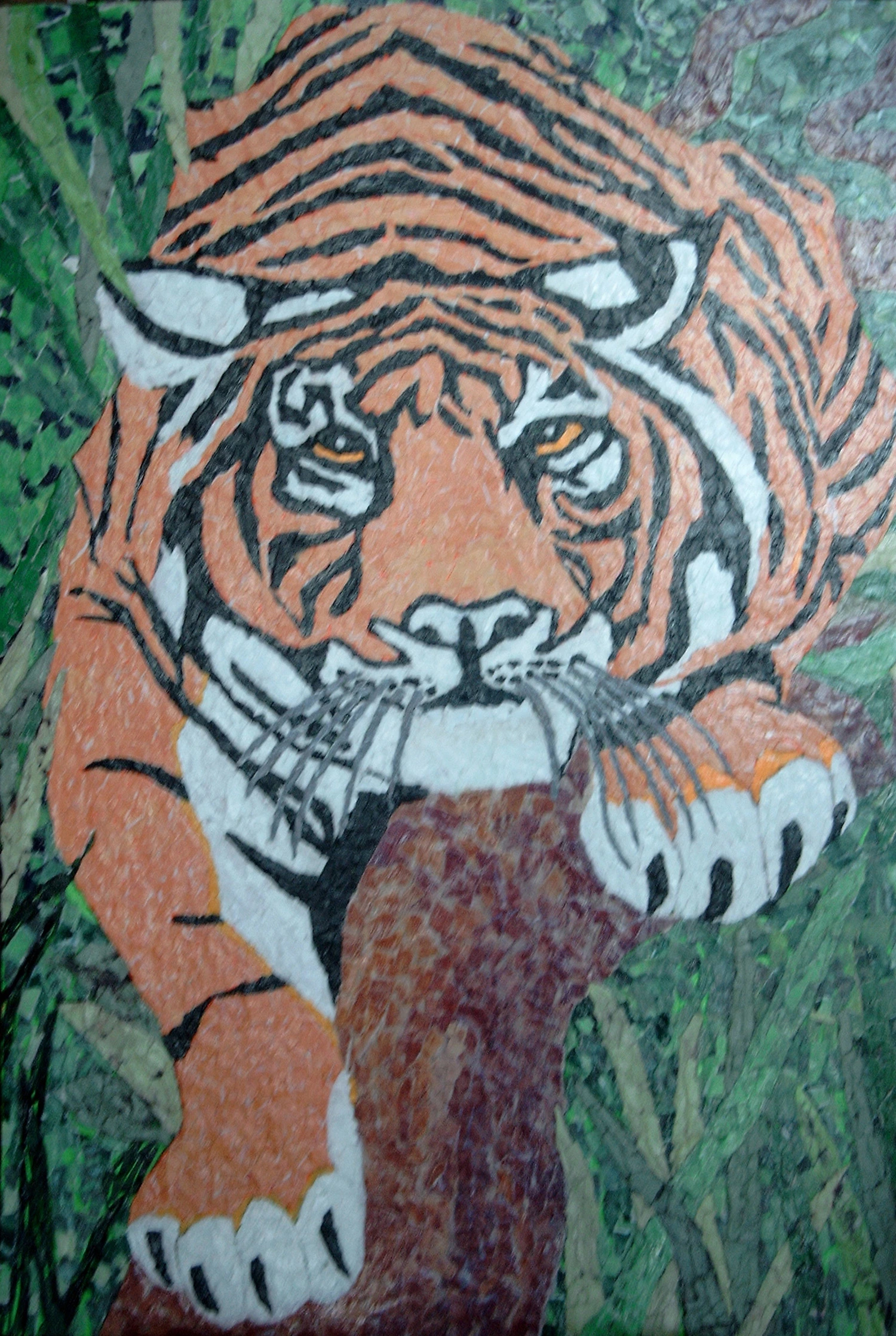
Tiger-1
A Masterpiece in Torn Paper Art
Tiger‑1 is one of my earliest explorations into torn‑paper collage, created at a time when I was experimenting with how paint and paper could interact to build something more dynamic than either medium alone. I began by painting the tiger directly onto A1 paper, establishing the form, energy, and movement of the animal. Only then did I begin layering torn fragments of paper over the painted surface — a process that felt instinctive, tactile, and surprisingly liberating.
This mixed‑media approach allowed me to keep the strength of the painted tiger while introducing the rawness and unpredictability of torn paper. The jagged edges, the shifting textures, and the overlapping fragments brought the tiger to life in a way I couldn’t have achieved with paint alone. The torn pieces echo the sharpness of claws, the wildness of fur, and the restless energy of the animal itself.
A Personal Beginning — and the Seed of Something New
Tiger‑1 also holds a special place in my heart because it became the starting point for something unexpected: my daughter Louise’s fascination with collage. She used to sit beside me while I worked on this piece, sometimes helping me glue fragments down, sometimes simply watching the process unfold. It was here, at the edge of my workspace, that she absorbed the rhythm of tearing, arranging, and layering — the quiet magic of building an image from fragments.
Years later, she created her own torn‑paper collage, Fragments of a Plant, for her GCSE Art at age 14. The lineage between the two pieces is unmistakable. Tiger‑1 is, in many ways, the parent piece — the moment where our shared creative thread began.
Collage — A Tradition of Reinvention
Collage has a long and fascinating history. The technique emerged in the early 20th century when Picasso and Braque began incorporating newspaper, wallpaper, and everyday materials into their Cubist works. Their “papier collé” experiments broke the boundary between fine art and the ordinary world, showing that fragments could carry meaning, texture, and narrative.
That spirit of reinvention is what drew me to collage. Torn paper has a raw immediacy that cut paper lacks. Each tear becomes a gesture — unpredictable, expressive, and full of movement. In Tiger‑1, the torn edges amplify the tiger’s power, giving the piece a sense of motion and vitality that feels almost alive.
Power, Movement, and Fragmentation
The tiger has always symbolised strength, instinct, and wild beauty. In this piece, the fragmented nature of the collage mirrors the animal’s untamed energy. The torn pieces suggest motion — a body caught mid‑stride, muscles coiled, eyes alert. The layering of textures creates depth, while the interplay of colour and paper gives the tiger a tactile presence that painting alone could never achieve.
Occasionally, fragments of text appear within the collage, adding subtle hints of narrative. These words, taken from magazines or printed materials, introduce themes of nature, power, and the human relationship with the animal world. They invite the viewer to look closer, to read between the layers, to discover meaning in the fragments.
A Contemporary Expression of a Timeless Technique
While collage has deep historical roots, it remains a vibrant contemporary medium — adaptable, expressive, and endlessly inventive. Tiger‑1 sits within this tradition, blending paint, torn paper, and text to create a piece that is both visually striking and conceptually layered.
For me, Tiger‑1 is more than a depiction of a tiger. It is a celebration of the collage technique, a moment of personal artistic discovery, and the quiet beginning of a creative thread that would later continue through my daughter’s hands.
Conclusion — The Enduring Power of Torn Paper
Tiger‑1 reminds me that art can emerge from fragments — from torn edges, layered textures, and the willingness to experiment. It captures the raw, untamed energy of the tiger while honouring the legacy of collage pioneers like Picasso and Braque. And it marks the moment where my own exploration of torn‑paper art became something meaningful, both artistically and personally.
Commission a Custom Art Piece
You can commission a bespoke piece of artwork in your choice of colour (subject to availability), adding a personal touch that reflects your unique story and experiences. Each piece is thoughtfully crafted, ensuring that no two are ever the same, just like the moments they capture. This process fosters a meaningful connection between artist and patron, celebrating the individuality of each person’s journey through time.
Commissions Form
The more detail you provide, the better we can tailor the piece to your vision. Commissions typically take between 2 to 6 weeks to complete.
Thank you for taking the time to explore the commissions process.
Please note, colours may vary from monitor to monitor.
Check out my other works here at https://soloist.ai/lynstef

Reviews
There are no reviews yet.